
Confederation plans to open up Swiss weather data
Meteorology and climatology are of great importance to every society and every economy. Meteorological data, analyses and forecasts are important factors in steering many processes and in many decisions – so says the Federal Council in its dispatch on the revision of the Meteorology Act.
As part of a fundamental reform of MeteoSwiss, the Swiss economy is to gain access to a free basic offering of meteorological and climatological data and services – access to data will be liberalised, and data and a basic range of services will be made available as “service public” offerings.
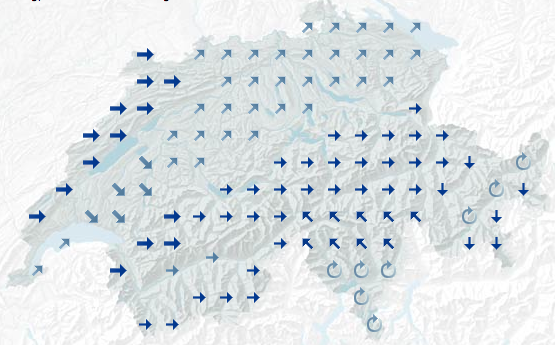
The Federal Council’s dispatch goes on to explain:
The institute provides its basic services free of charge and receives compensation for them. Providing the data free of charge encourages their use and thus increases their economic benefit.
In doing so, Switzerland is following an internationally established practice of openness: releasing essential data has been shown to multiply its economic benefit. Accordingly, we learn from the press release:
With the planned release of weather and climate information, Switzerland is following an international trend. At European level, 26 national weather services have signed the Oslo Declaration on data policy. The declaration calls for direct access to basic meteorological data and products and for the release of these for commercial re-use. (..) In addition, implementing the Open Government Data strategy is intended to foster innovation and the development of new products on the private weather market.
As part of the reform, MeteoSwiss will, as an autonomous public-law institution of the Confederation, provide specialised data and services for a fee and will thus also have to orient itself more strongly towards the market – greater efficiency is expected, and competitive pressure will arise.
Accordingly, various critical voices can already be heard. In the consultation, for example, the Green Party rejected the spin-off of MeteoSwiss as “unnecessary and motivated by fiscal policy”, while the Swiss Trade Union Federation warns of cuts in staff and quality and complains of “bureaucratic over-regulation”. Isolated criticism is also being voiced by the private sector: after all, the new data situation opens the playing field wide for providers, the potential of the data can and will be exploited much more broadly, and new pressure to compete and innovate will arise.
Those clearly in favour of the reform were first and foremost a large majority of the cantons, and Opendata.ch also explicitly welcomes the planned reform: opening up public data collections for the benefit of the general public, and thereby creating better service, more innovation, more competition and ultimately more jobs, must be the goal of a deliberate, forward-looking data policy. Especially in times of climate change, these data are too relevant and too valuable for their potential not to be fully exploited.
What innovative new weather services would you like to see?