
Unfallkarte.ch: transparency versus privacy?
- Media
Why the Federal Roads Office should share its treasure trove of data with everyone.
Unfallkarte.ch [this URL now leads to https://schweizer-autoankauf.ch/] is making headlines these days: for the first time, where road accidents happen in Switzerland has been strikingly presented and made interactively accessible. The map is impressive, and so are the figures (8,639 seriously injured! 659 dead! CHF 874,223,663 in property damage!). And the headlines (“People in Romandy twice as likely to drive drunk!”, “Most dangerous of all: the Gubrist!” ) undoubtedly sold a copy or two of the Tamedia newspapers jointly behind it, SonntagsZeitung, Le Matin Dimanche and Tages-Anzeiger.
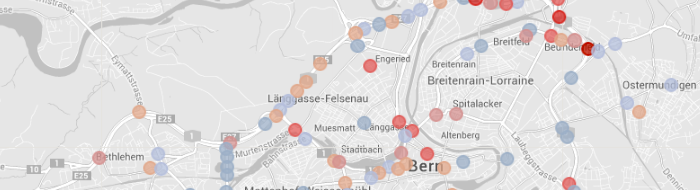
Behind it lies a treasure trove of data, recorded by police officers and compiled by the Federal Roads Office FEDRO. In detail, the data tell where and how crashes happened, whether cyclists, pedestrians or lorries and so on were involved, and when, where, what and who was harmed, and how badly. Even information on the causes of the accidents, such as whether alcohol was involved, can be seen there; however, it is summarised in so-called “clusters” rather than broken down into individual cases.
These data are important. They help us better understand the Swiss transport network and behaviour on it, to assess risks and to set priorities. And they underpin with facts the debate – all too often conducted with too much passion – about vehicles, the routing of fast and slow traffic, or the discussion about infrastructure projects.
Now Tamedia has landed what journalists call a scoop, an exclusive that competing media could only follow by quoting it – a showpiece of data journalism, and an indication of how the leverage of a media house can be put to use. This is a promising signal for our media landscape – and it is likely to be only a beginning.
Yet what was recorded by police officers and compiled by the Roads Office is not accessible to citizens. The data were financed with taxpayers’ money, but they are not open. In this case they were licensed to Tamedia; third parties are not permitted to use them without explicit official permission – so these data do not belong to the citizens but to the office, which decides who may do what with them, how and where.
In the discussion about opening up datasets, the same reasons are usually put forward: “too expensive”, “too complicated”, “may be misunderstood” and many more. In the case of FEDRO, the argument is that there are fears that published data could violate citizens’ privacy .
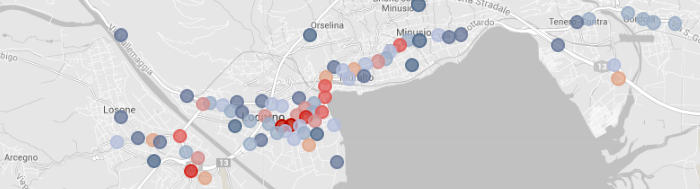
This fear is also the reason why the accident causes mentioned are only summarised in groups as clusters on unfallkarte.ch. If you click on an individual location, the information on what happened disappears. If the cause of each accident were listed, FEDRO fears, the interactive map could be used to pillory the people involved. The tabloid media, for example, could examine the times of all accidents caused by alcohol and link them with police reports in order to prove politicians guilty of drink-driving.
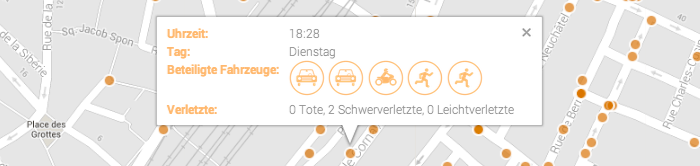
So if an accident happens in your home municipality, you could check the cause on the web. In concrete terms, this could become delicate in the case of a drunk driver who kills a child. Suddenly the grieving parents have it in black and white – or rather pixel by pixel – why their child had to die. Possibly even before any court has passed judgement.
It is therefore quite understandable that, faced with such horror scenarios, FEDRO is reluctant to hand over its data.
Nevertheless, the office and the Swiss public should examine the following questions once more in depth: should a politician caught driving drunk be allowed to insist on his privacy? Could a case like the one described above occur at all if the data on the cause of an accident are made accessible a year later, as in the case of Unfallkarte.ch? Can the data not be made accessible in a way that minimises such risks?
And quite fundamentally: how much weight should be given to the argument that someone who already knows a lot can, thanks to open data, come to know more than they should? In other words: of course, anyone with many anonymised sources can draw conclusions that partly undo the anonymisation. But is that an argument for not publishing any data? Can this residual risk justify a restrictive data policy? Could the public sector, could Switzerland as a whole not benefit much more if FEDRO opened up its data? For everyone, and not just for Tamedia?