Hacker portrait
- GLAM
Thomas Weibel
Newspaper and radio journalist, author, blogger, teacher, consultant, web designer and programmer. He was a member of the programme management of Swiss radio station DRS 2. Today he is a self-employed multimedia producer and teaches multimedia storytelling and convergent media production at the University of Applied Sciences HTW Chur and at the Bern University of Applied Sciences.

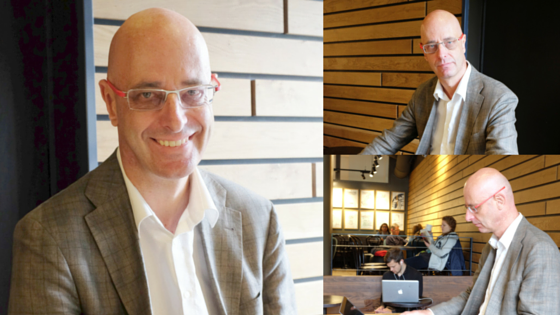
Thomas Weibel is sitting in a café near the station, surrounded by smartphones, laptops, coffees and lots of people capable of multitasking. This is where he stops when he has time between two appointments – there is open Wi-Fi. Weibel has managed to reach the point where his job now lets him follow his curiosity without restraint. As a digital nomad, he not only switches nimbly between different professions (and vocations), but also seems to feel entirely at home on the move.
He is playing Tarot Freecell, a solitaire game that he designed, programmed and built at the last hackathon with a set of historical tarot cards from 1880. “My intention was to bring historical playing cards back to life: as exhibits in display cases they have lost their actual purpose. You may only look at them, not touch them, let alone play with them.” Even though the game is now played by an average of 100 players a day, Weibel is only half satisfied with the success of his hackathon project: “At first my game did arouse interest – among other programmers, among individual museum curators. But after that, concrete projects – for example touchscreens in exhibitions or additions to existing websites – petered out.”
A pity, because the site is well worth a visit, even if the cards (or “icons of past realities”, as Weibel calls them) do not want to be sorted by value and suit. Incidentally, Tarot Freecell can also be played quite comfortably on a smartphone. This way.
Weibel’s own playful streak, his joy in and interest for data, history and culture, and his wish to create new ways of access are so great that we are once again delighted to welcome him to the hackathon this year. Luckily! For even if Tarot Freecell was not taken up further by any cultural institution, the first Cultural Data Hackathon in Bern made a lasting impression: “Even today, almost a year and a half after the first culture hackathon, I still take a look at the applications that were built and am still deeply impressed by everything my colleagues put into practice in those two days. This unique combination of data and creativity that the culture hackathon offers has enormous potential. That’s why I am hugely looking forward to the second edition in Basel.”
He takes many of the ideas gathered at the hackathon into lectures and talks, into conversations with colleagues and students, or tells friends and his family about them. What Weibel therefore hopes for above all from this year’s hackathon is “food for thought” and of course “projects that outlast the event and find a broad audience.”
As a “nerd and programmer” Weibel brings many qualities that enrich any team at the hackathon. He is a “curious guy” and for that reason alone open to joining in on exciting ideas. But of course he will also be travelling to Basel in July with a project idea of his own in his luggage: “The thought that games can bridge generations, if not centuries, still preoccupies me. Backgammon is one such game – one of its forerunners was found in the burial chamber of Tutankhamun. The Codex Manesse, the songbook created around 1300, contains a plate showing two players in front of a backgammon board that looks exactly like ours today. I would like to make this illustration interactive, that is, provide it with a playable backgammon, so that you can play virtually against an opponent from the Middle Ages.”
To all interested graphic designers, savvy Photoshoppers or playful all-rounders: fancy joining this project? “It’s a Match” – promise!