make.opendata.ch Research Hackdays: OpenSNP
- Research
On 5/6 June 2015, the make.opendata.ch Research Hackdays will take place in Zurich and Lausanne. In this context, we are presenting here in advance various open datasets, which will then be tackled on site by motivated programmers and designers, researchers and journalists, experts and laypeople.
Today: openSNP, introduced by Dr. Ulrich Genick of the Institute of Molecular Systems Biology at ETH Zurich. So let us dive into the world of personal genetic data:
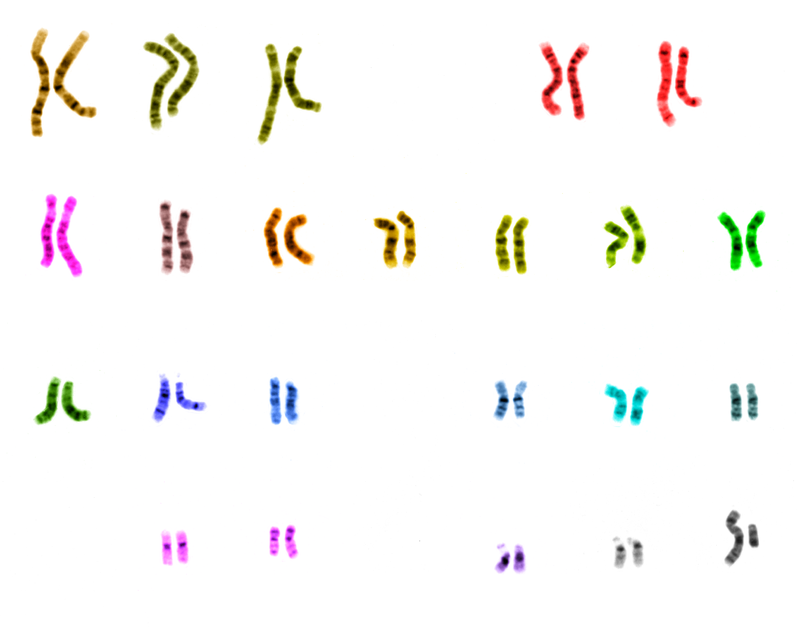
Much like computer files, in which information is stored in a linear sequence of ones and zeros, genetic information is stored in a sequence of four so-called bases (“A”, “T”, “G” and “C”). The entire genetic information of a human being (the genome) consists of 6 billion such bases.
If you compare the genome sequences of two people, you find that the two sequences are >99.9% identical to each other. But there are differences. Where one person has an “A”, another may have a “G”. Such small changes are called SNPs. It is predominantly these SNPs that make up the genetic differences between different people. SNPs determine whether we have straight or curly hair and light or dark skin. Together with other factors (e.g. diet, etc.), they also determine our risk of certain diseases.
Thanks to rapid technical developments, it has now become possible to determine almost the entire list of a person’s SNPs in a single test. Such tests now cost only a few hundred Swiss francs and provide the person tested with a dataset commonly referred to as personal genome data.
What are genome data used for?
Genome data can be used for many different purposes. On the one hand, a person can use their genome data to estimate certain health risks or to adapt their diet to their personal metabolic needs. On the other hand, it is possible to gain information about one’s genetic ancestry from one’s genome data.
What is openSNP?
OpenSNP is a website on which individuals who have their own genome data can make these data public and available for research. Unlike many other research data, the openSNP data were not collected centrally by a research team and then made public. Instead, the openSNP members had their data generated on their own initiative.
Challenges!
The two biggest challenges for the openSNP community are, first, linking their own genome data with the extremely extensive scientific literature on the relationships between genetic predispositions and personal characteristics in terms of health, fitness, nutrition, etc. The other challenge is to develop a mechanism through which members can jointly conduct research with their own data. This would require a platform on which participants could link their genome data with personal characteristics (phenotypes) in order to determine the exact genetic features that give rise to these characteristics. The scientific questions of data analysis have already been resolved. The challenge lies rather in developing user-friendly platforms that integrate these analyses.
Sounds exciting? Register now for the make.opendata.ch Research Hackdays!