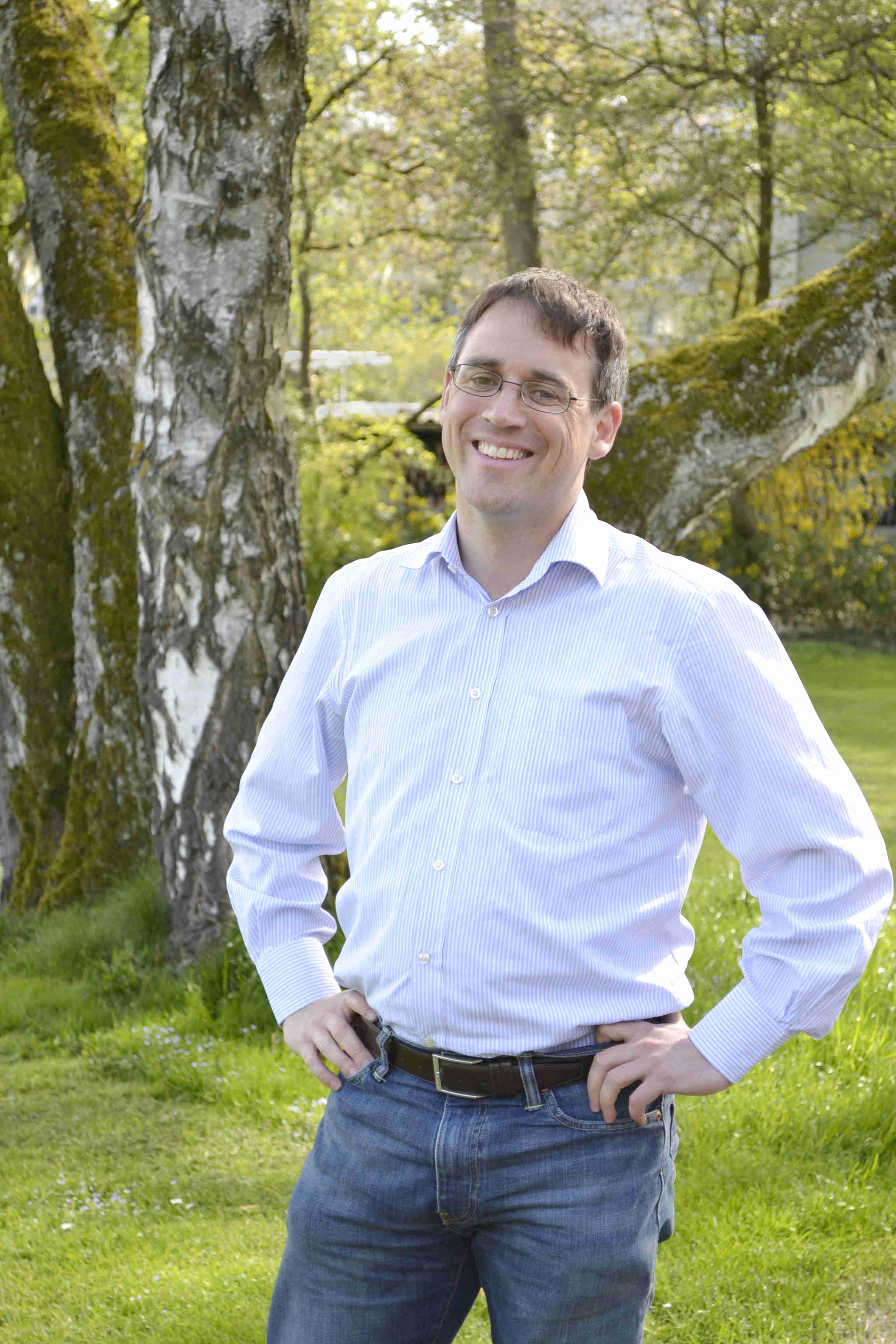
Hacker Portrait
- GLAM
Beat Estermann
In conversation with the founder and initiator of the OpenGLAM working group and coordinator of the Swiss cultural hackathon. Among other things, he explains what we should picture when we think of a hackathon and how such an event works.
Beat Estermann is the founder and initiator of the Swiss OpenGLAM working group. The abbreviation “GLAM” stands for “Galleries, Libraries, Archives and Museums”. “OpenGLAM” is therefore the counterpart of “Open Government” in the field of heritage institutions. It is about open data on the one hand and new opportunities for participation on the other. Estermann sums up what the working group stands for in 5 principles:
“First, we call for digital information about heritage objects – that is, the metadata – to be made available online under a suitable licence without restrictions on use. Second, we are concerned that works in the public domain should not be subjected to new restrictions on use. Third, when data is published, it should be communicated explicitly what kind of re-use is desired or permitted. Fourth, it is important that open, machine-readable file formats are used when publishing data, and fifth, internet users should be given the opportunity to actively use such data and to participate in cultural discourse.”
With these principles in mind, the working group launched the cultural hackathon two years ago. Not least because “a hackathon is a good way of getting cultural data released”. Estermann is pointing to a phenomenon we probably all know: it takes a concrete occasion to encourage you to engage with things that are not at the top of your to-do list right now. “Prompted by the hackathon, data providers engage more with the user perspective, while data users take on new datasets. The event can also help cultural heritage find its way into the free online encyclopaedia Wikipedia more often.” It is a win-win situation for both sides: “Research and education are made easier and cultural creation is encouraged.”
This year the event takes place at the beginning of July in Basel. The aim of the hackathon is “to bring the various stakeholder groups together”. On the one side there are the data providers such as museums, archives and libraries, and on the other side there are the hackers. And that really means everyone who fits under this umbrella term: “software programmers, researchers, people with ideas, creatives, Wikipedians, but also everyone coming from the field of the digital humanities.”
What should we picture when we think of a hackathon? How does it work?
“The first thing is to find a suitable idea and perhaps to tighten it up a little. Two days is not much time. To come up with ideas, you look at data made available by cultural and heritage institutions and think about what you could do with it. Ideally, this review of the data should already take place before the hackathon.
At the hackathon these ideas are then presented. The participants try to win people over to their own idea or join other exciting plans. Together these people form a project team which, ideally, combines different skills and strengths. Of course, it is quite possible for the ideas to evolve depending on how the team is made up.
And then the first thing is to work with the data.
Anyone who wants some input of their own in between will find it in the side programme offered in parallel to the event during the two days.
Finally, after two intense and exciting days, the projects that have been developed are presented on Saturday evening. This year, for the first time, the presentation will also be open to the public. With this we are trying above all to reach data providers, funding organisations and an interested public who may be encouraged by the results to continue supporting certain projects.
And of course all participants and visitors get the opportunity to talk directly with experts from various fields over the joint apéro. Ideally, new projects with Swiss cultural data will emerge in the future from the hackathon, or simply thanks to the newly made contacts.”