
LLMs, e-ID and Federal Supreme Court decisions – a look back at the Open Legal Lab 2024
- Hackathon
- Legal

From 24 to 25 March this year, the Open Legal Lab 2024 once again drew numerous lawyers, programmers and other interested people to Magglingen. On Sunday morning, 70 participants gathered in Magglingen, where they were welcomed by a delicate blanket of snow and cool temperatures.
At around 10 o’clock, the organiser eJustice.CH officially opened the Open Legal Lab. After those present had received important information about the course of the Open Legal Lab 2024, the presentations of the individual challenges began. A total of 14 challenges were presented, with the challenge owners each having three minutes to win the hackers over to their challenge.
After the presentations, participants had the opportunity to join the challenge owners. Thanks to the manageable number of challenges and the large number of hackers, most challenges found enough team members. In total, ten challenges were pursued.
After lunch, the teams organised themselves to develop strategies for solving their challenges. Particular attention was paid to the challenge owners, who supported their teams with their expertise
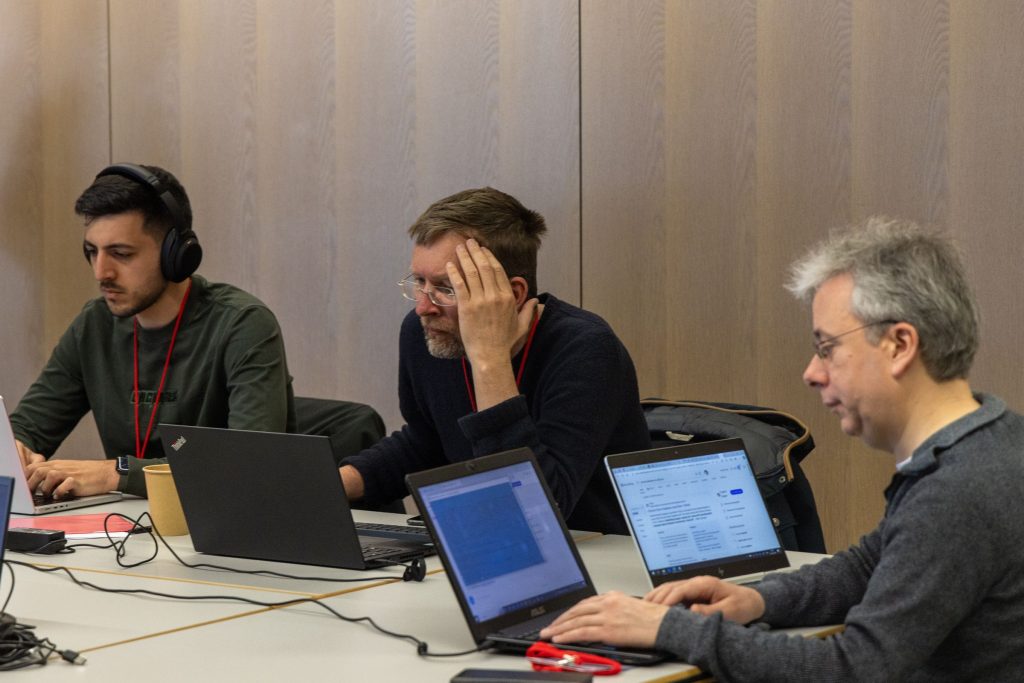
This year, too, work went on into the early hours of the morning. This edition, however, was shaped by a spontaneous project by Oleg Lavrovsky. At around 10 pm, he set up his computer in the main room and challenged the hackers to a prompt battle. In “Innocent until Prompted Guilty“, two participants tried to win the favour of the audience by writing a better prompt than their opponent.
On Sunday, some of the teams started early on the final completion of their projects. They had until 3 pm to prepare their final presentations, which then took place as part of the Magglingen Legal Informatics Seminar. It became clear that large language models (LLMs) were once again a central topic. LLMs provide the algorithmic basis for generative AI tools such as ChatGPT or Bard. But other topics such as the e-ID or Federal Supreme Court decisions also received attention. The results of the projects were once again of the highest quality and also impressed those attending the Magglingen seminar. Further impressions of the Open Legal Lab can be found here.
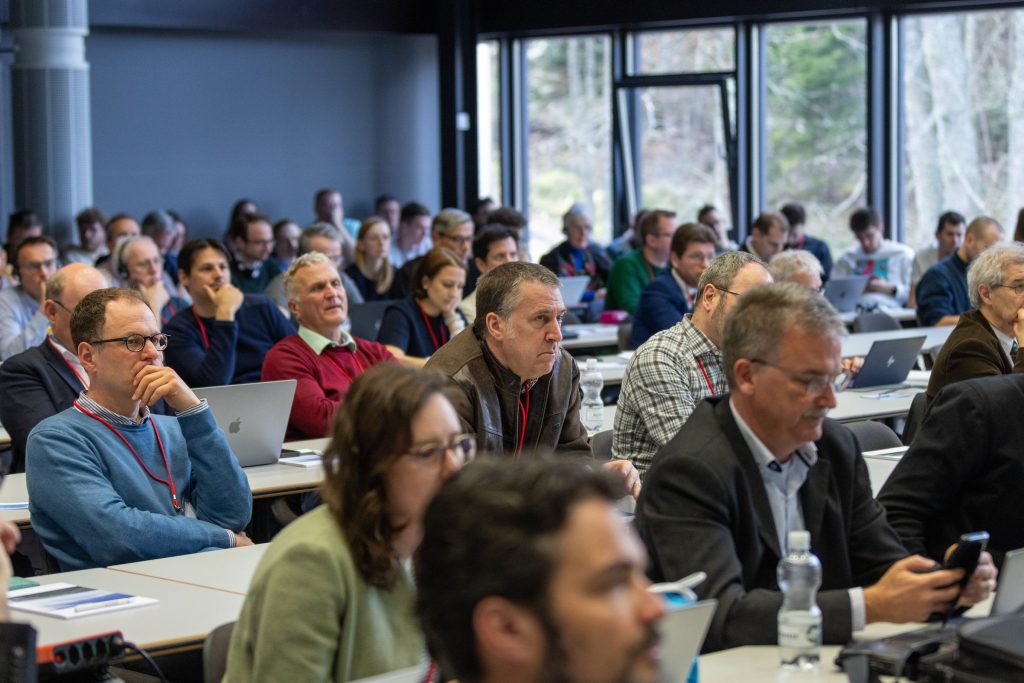
In conclusion, on behalf of eJustice.CH and Opendata.ch, we would like to express our sincere thanks to all the hackers for once again making the Open Legal Lab an important meeting place for developing innovative solutions for the legal sector. We would also like to thank all the sponsors of the hackathon warmly. Without their generous support, this event would not have been possible. We look forward to welcoming all participants back to Magglingen in 2025 to continue working together on the future of our legal system.